Investigating Red-Orange Surface Defects Linked to Fused Silica Contamination
A 2020 field case study — what the customer saw, what two simple on-site checks indicated, and how an urgent one-ton trial grew into ongoing cooperation.
At a glance
1. The customer noticed red-orange patches on its finished products
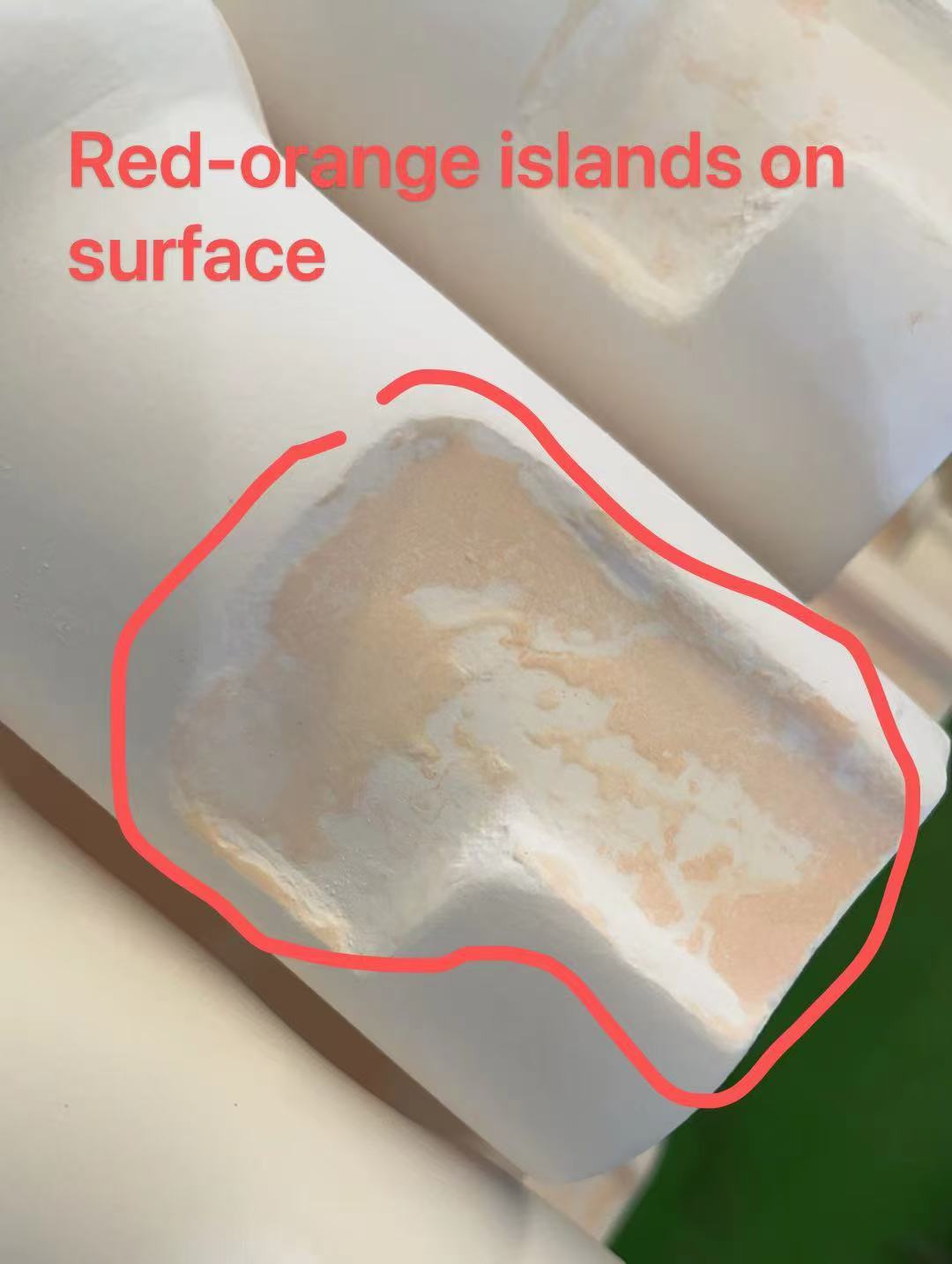
In 2020, a new customer contacted us after red-orange patches began appearing on the surface of its finished products.
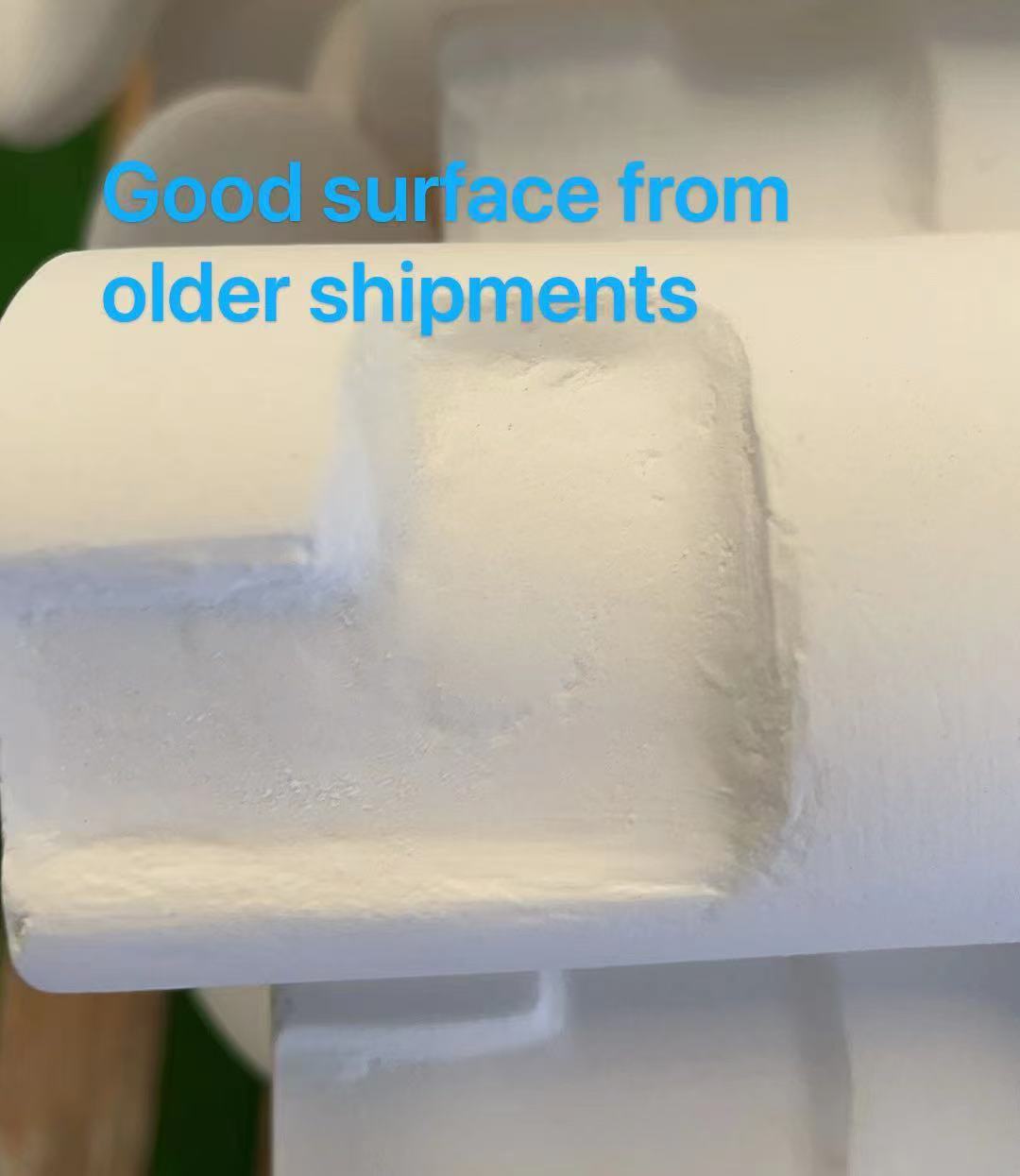
The customer compared the abnormal products with products made from previous fused silica shipments. The earlier products had a clean and uniform surface, while the affected products showed clear red-orange areas. Its existing supplier had not provided a clear diagnosis or a timely solution.
2. The first technical hypothesis
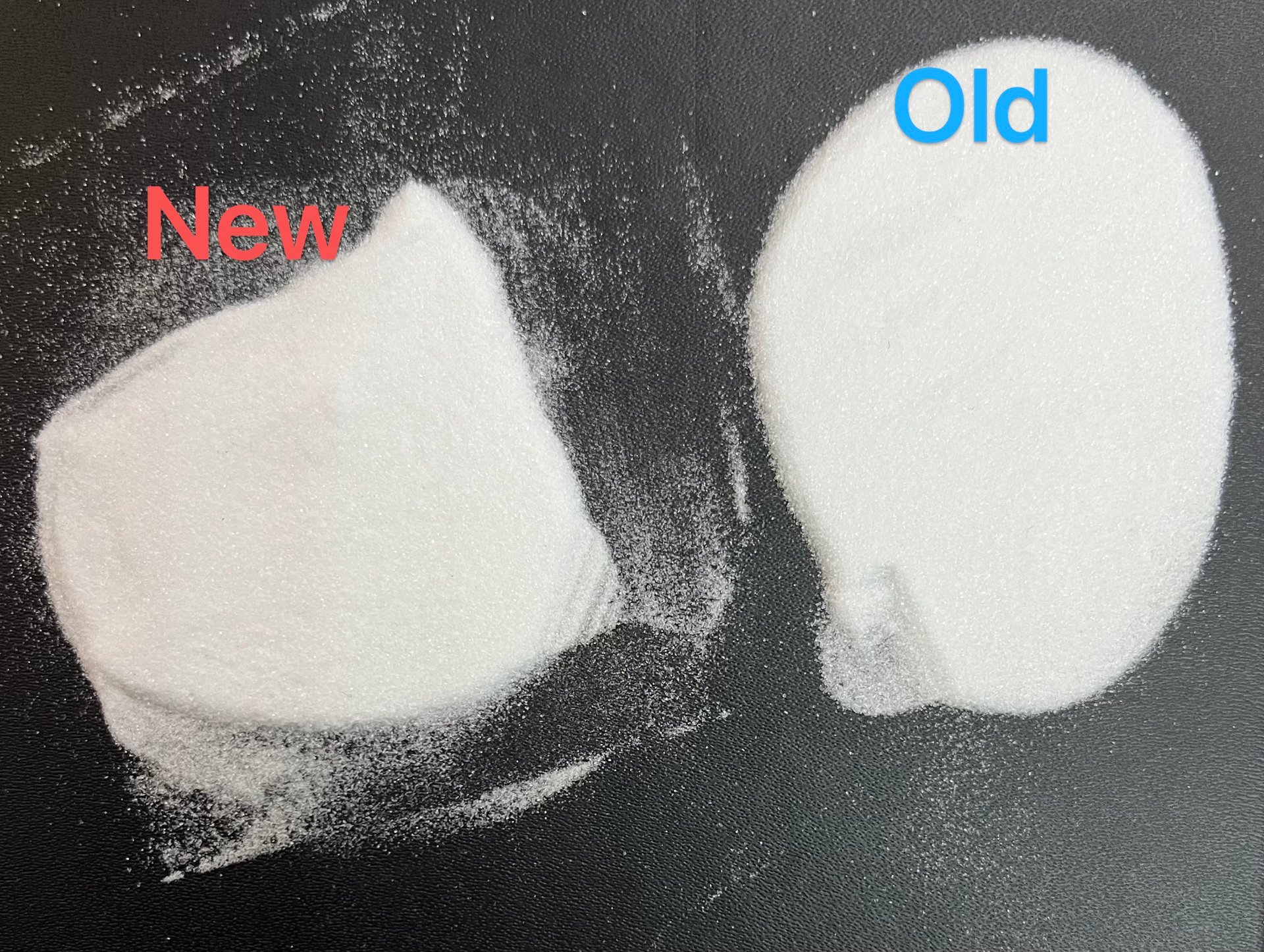
After reviewing the photos and discussing the problem with our technical manager, we suspected excessive metallic iron or other ferromagnetic contamination in the fused silica.
Metallic particles may enter fused silica during crushing, grinding, screening or conveying. If magnetic separation is ineffective, these particles can remain in the finished material and oxidise during processing, causing yellow, brown or red-orange discoloration.
The orange-red discoloration appearing after the customer's thermal process was consistent with iron-bearing contamination becoming visible during processing.
3. Two simple on-site checks
To check this possibility, we suggested two simple tests that the customer could run on its own incoming material without any lab equipment:
The two-test sequence
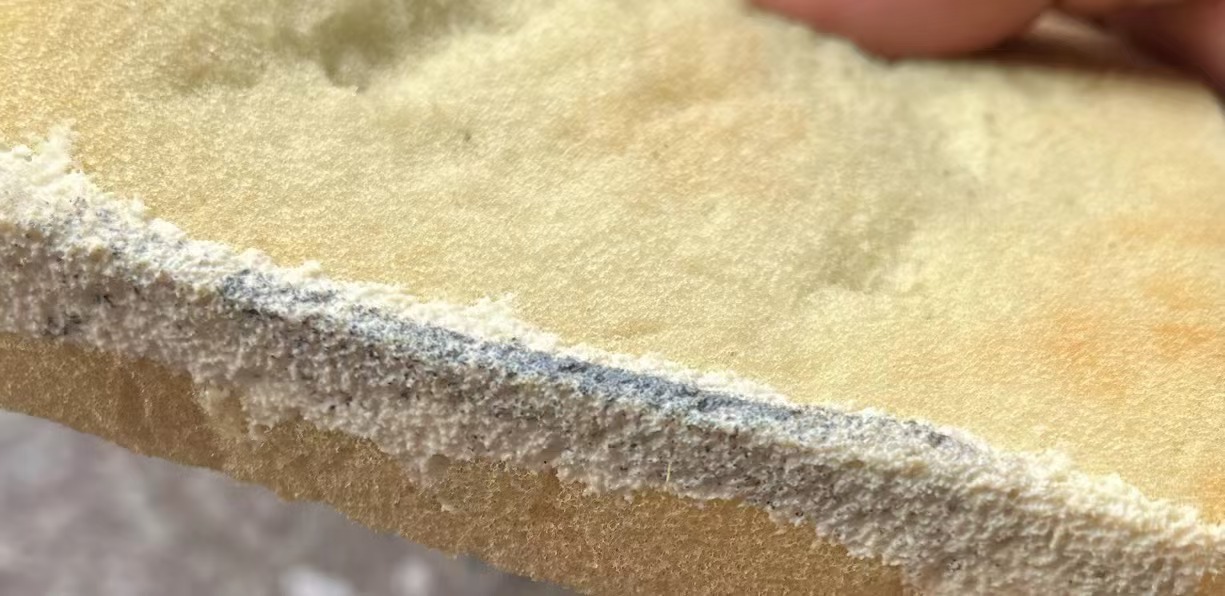
- Lightly wet a representative fused silica sample and allow it to stand for a period of time. Watch the surface for yellow, brown or orange discoloration that builds up where the water sits.
- Move a clean magnet through the dry material and observe whether metallic particles are collected.
These are simple screening checks that can be run on a small representative sample. They do not identify or quantify the particles, so laboratory analysis is still required for confirmation. When both checks produced abnormal results, however, the customer had a practical basis for evaluating a replacement batch.
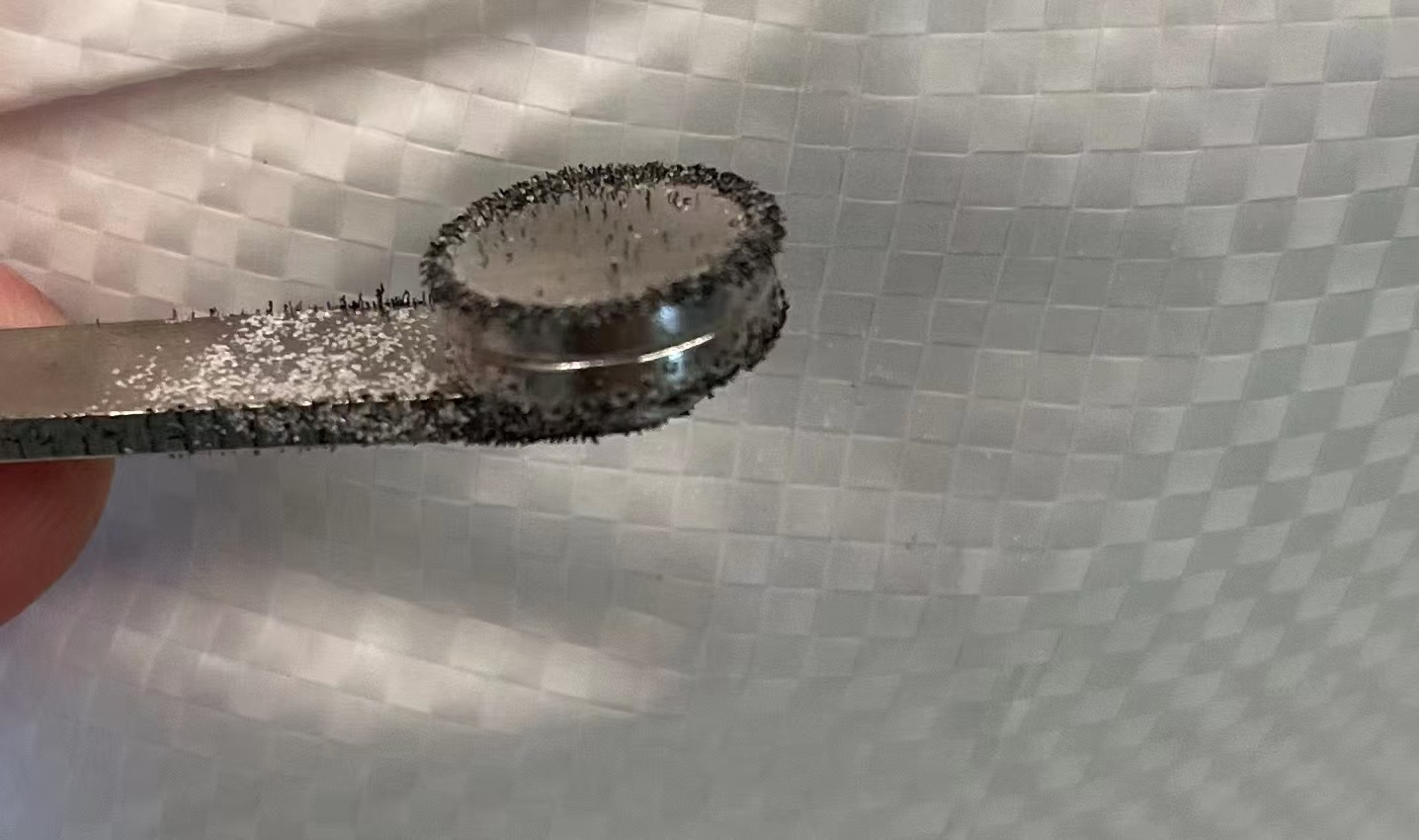
4. What the two checks together indicated
After the wet sample had been left standing, visible yellow-brown discoloration appeared. The magnet also collected a considerable amount of dark magnetic particles.
Together with the surface defects, these observations strongly indicated excessive ferromagnetic metallic contamination. Possible causes included ineffective magnetic separation, equipment wear, or the absence of a secondary magnetic-separation step at the supplier's plant.
We did not inspect the supplier's production line, so this is a strong indication rather than a confirmed root cause — confirming the composition and quantity of the contamination would require laboratory analysis. The customer decided the indication was sufficient to act on.
5. From an urgent trial to ongoing cooperation
Because the original supplier had still not resolved the problem, the customer placed an urgent trial order for one metric ton of fused silica from Chemsize. The material was shipped by air to reduce the interruption to its production.
After the trial, the customer continued purchasing from us. Our cooperation has continued since 2020.
Trust is not built by pretending that problems never happen. It is built by responding honestly and solving them.
6. What we take from it
The relationship was built not only on product quality, but also on how problems were handled. On one later shipment, we mistakenly used standard pallets instead of the customer's requested three-runner pallets. We acknowledged the mistake and worked actively to resolve it.
Today, the customer regularly asks us to issue the proforma invoice quickly so that payment can be arranged before production begins. For us, reliable supply does not mean that problems can never occur. It means investigating them carefully, communicating honestly and taking responsibility when a solution is needed.
Facing a quality problem your fused silica supplier isn't solving?
Send us the photos, the symptoms and the batch number — we'll review and tell you whether and how we can help.
Talk to our technical team