Most buyers never see how an order actually moves through a plant. They see a quote, a proforma invoice and then a container photograph some weeks later. This update records the documented shipment stages of one 54 MT order of fused silica sand and powder, from source-bag sampling and pre-shipment checks through loading of both containers.
What was in the 54 MT shipment?
The order covered two product forms in three particle sizes. The figures below are the facts of this shipment, recorded as they happened rather than taken from a general datasheet.
| Order confirmed | 3 September 2026 |
|---|---|
| Pre-shipment sampling | 6 September 2026 |
| Loading completed | 8 September 2026 |
| Total volume | 54 MT |
| Containers | 2 |
| Fused silica sand | 30–50 mesh |
| Fused silica powder | 200 mesh and 325 mesh |
| Packing | FIBC jumbo bags |
| Turnaround | Five calendar days from order confirmation to completed loading |
| Effect on other orders | None — other confirmed orders continued on schedule |
All of it was packed in FIBC jumbo bags and loaded into the two export containers.
How was the order completed within five calendar days?
The order was confirmed on 3 September and loading was completed on 8 September — five calendar days later. The sample labels show production dates from 3 to 6 September, so this was not simply a shipment released from finished stock.
Because the available production window was tight, Chemsize coordinated the required particle sizes across the relevant production teams while keeping the confirmed delivery dates of other orders unchanged. Processing, batch sampling, particle-size checks, packing and container arrangements were organised within the same short schedule.
Pre-shipment samples were collected on 6 September, and loading of both containers was completed on 8 September. This kept the cargo on schedule for the nearest available sailing.
This was the actual result for this order, not a standing five-day lead-time promise.
What did the pre-shipment check cover?
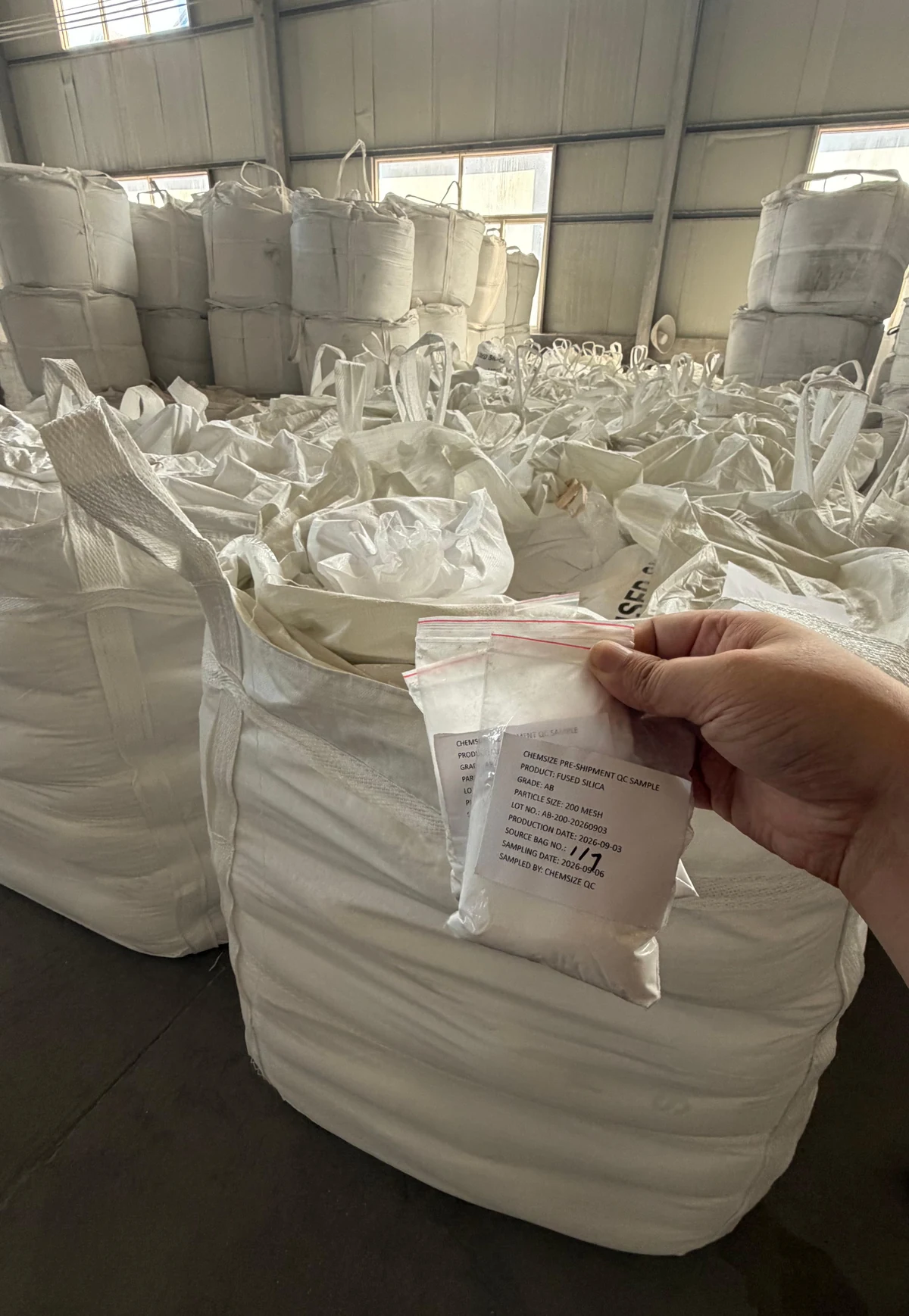
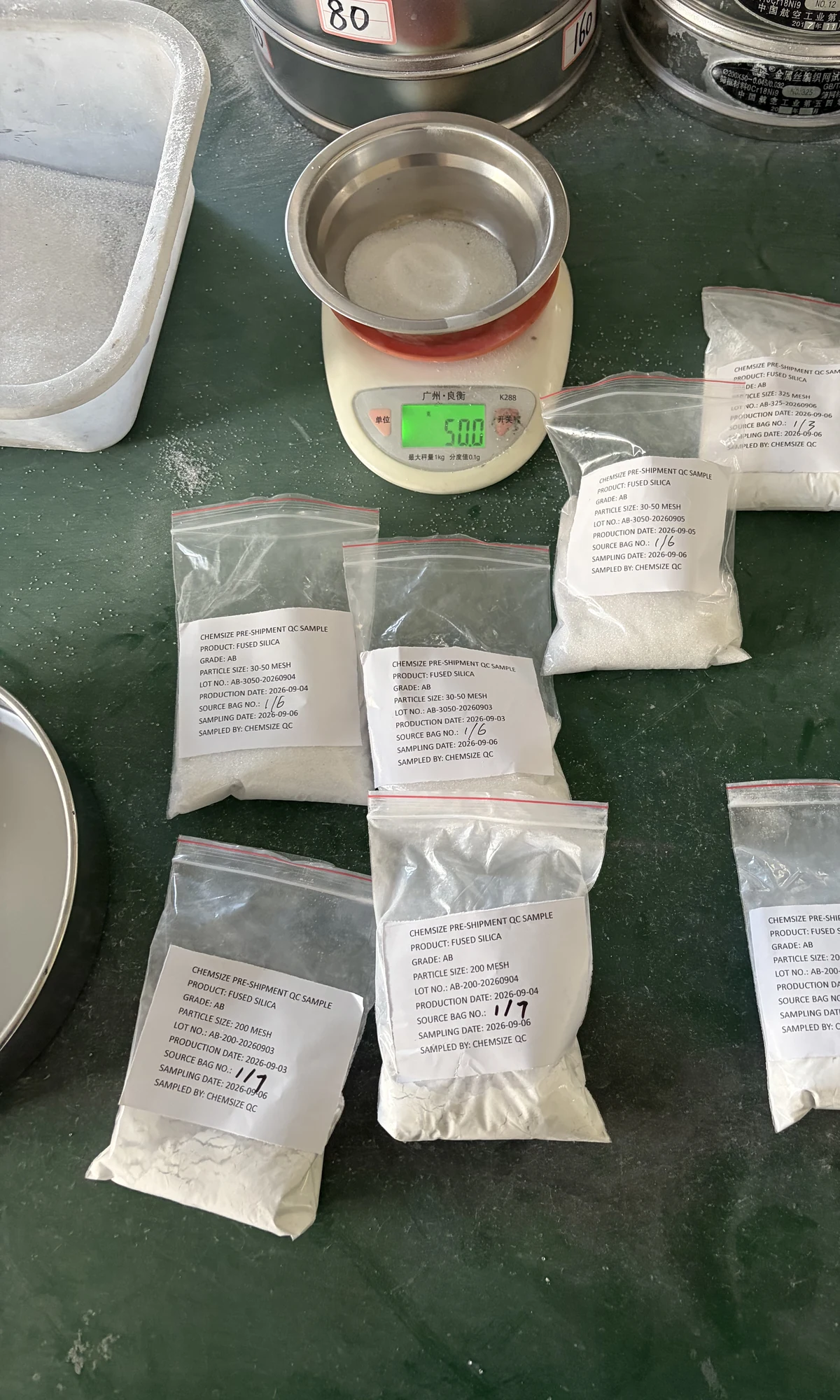
On 6 September, separately labelled samples were prepared from identified source bags. Each label recorded the product, particle size, lot number, production date, source-bag number and sampling date.
The photographs show samples for 30–50 mesh fused silica sand and 200 mesh and 325 mesh fused silica powder. The samples were weighed and prepared for the applicable particle-size checks before loading.
Recording the production lot and source bag makes it possible to connect the inspected sample with the material prepared for shipment, rather than treating the complete 54 MT order as one anonymous lot.
Loading the two containers
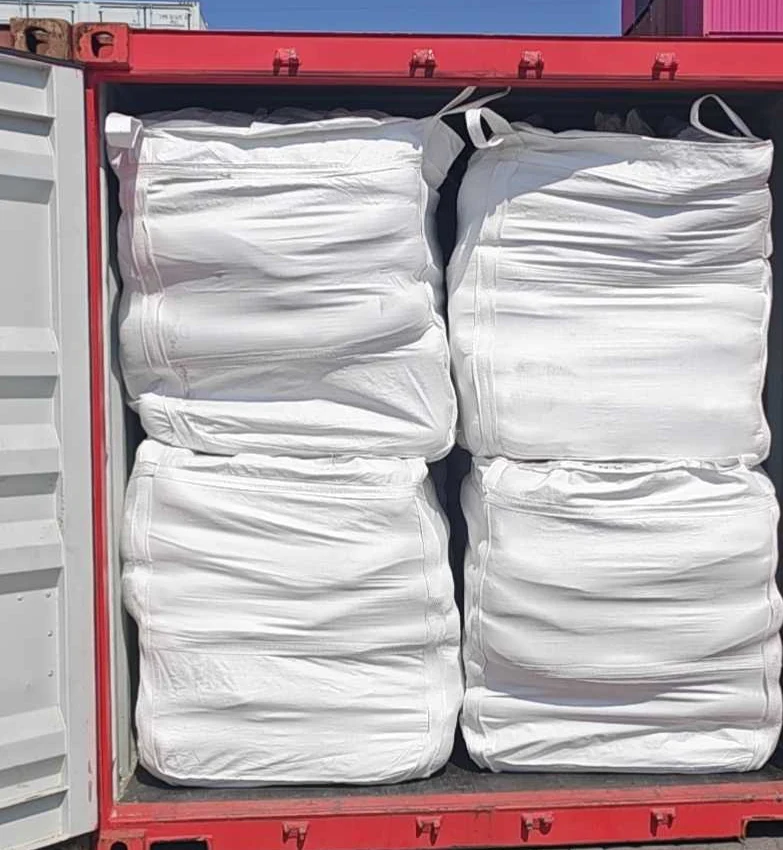
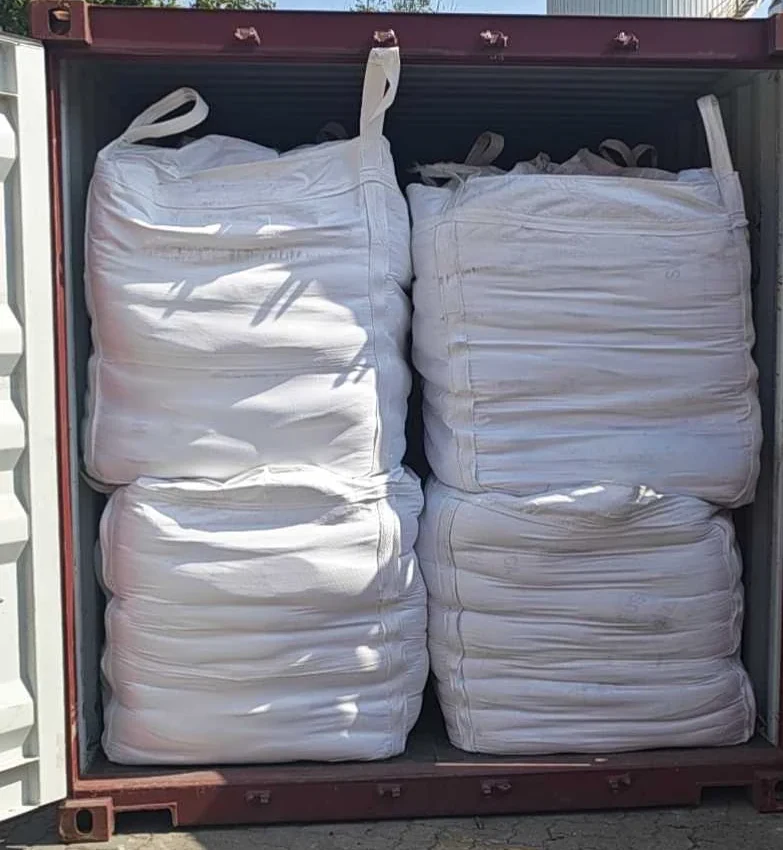
Loading of the 54 MT order was completed on 8 September. The fused silica sand and powder were packed in FIBC jumbo bags and loaded into two export containers.
The two loading photographs document each container after the bags had been placed inside. Completing both containers within the available shipping window kept the cargo on schedule for the nearest available sailing.
Is a five-calendar-day turnaround normal?
No — five calendar days was the result for this particular order, not a standing lead time.
It was possible here because the particle sizes required could be scheduled with the relevant production teams, the sampling and particle-size checks were fitted into the same window, and the shipping arrangements were in place in time.
Realistic lead time depends on what you ask for. A standard particle size that is already in production can move quickly. A custom particle-size distribution, a different packing format, a first-time grade trial or a peak booking season will each add time. If you are working to a fixed loading date, the useful thing to do is tell us the date first and then agree the specification around it, rather than fixing the specification and hoping the date holds.
Planning a shipment around a fixed loading date?
Chemsize supplies fused silica sand, grains and powder in standard and customised particle sizes, including 30–50 mesh sand and 200 or 325 mesh powder. Send us your specification, packing requirement, quantity and target loading date, and we will confirm what is achievable from stock and what has to be produced.
Check Availability and Lead Time